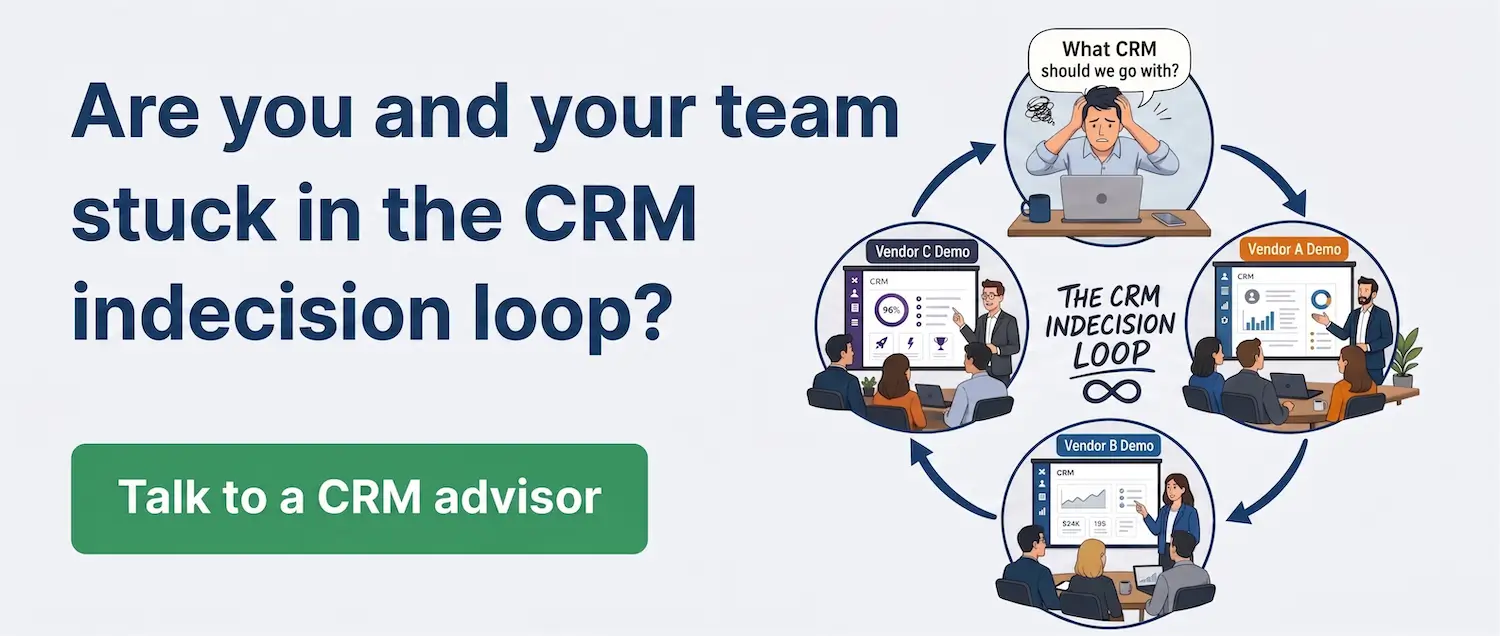


Autonomous or ‘self-driving’ CRM shifts a CRM system from a passive system of record to an active system of observation, data collection & organization, recommendations, and action.
It’s common knowledge that most salespeople are averse to spending time entering data because there are no direct incentives for it.
Autonomous CRM allows salespeople to spend considerably more time doing what they are incentivized to do: interacting with prospects and customers and closing deals.
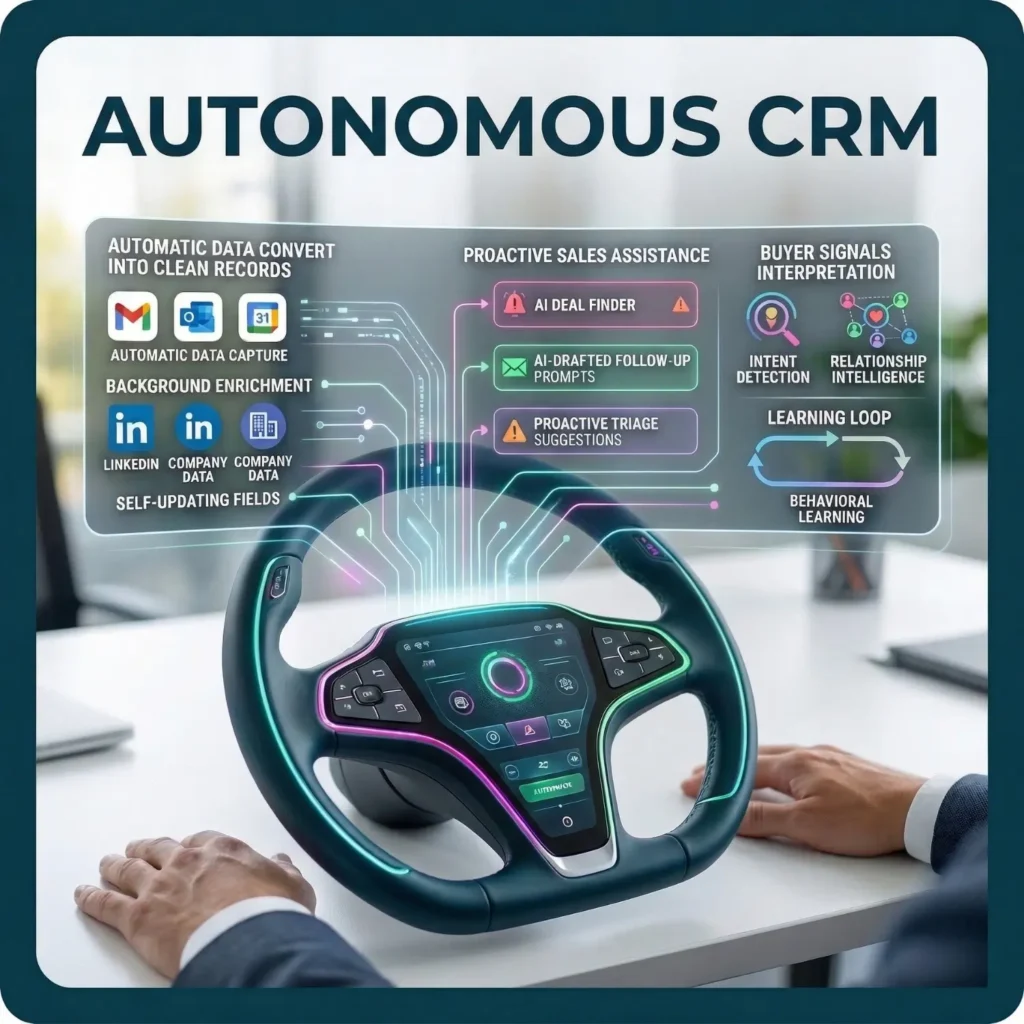
However, unlike Tesla’s Fully Self-Driving (Supervised) mode, in which the driver may rarely take the wheel, salespeople must regularly place their hands on the CRM application’s steering wheel.
As we all know, AI is imperfect, so for now, a human-in-the-loop (HITL) is needed to keep data clean.
As such, salespeople aren’t completely off the hook, even with an AI-native CRM platform.
What any AI-native app can automate is limited only by imagination. For CRM vendors, the time between imagining and delivering has never been shorter.
The following are just some of the many ways an autonomous CRM can help salespeople spend less time on data entry and more time selling.
Autonomous CRM Data Capture & Self-Updating
A self-driving CRM automatically extracts data from Gmail, Outlook, and Calendar events. It creates new Account and Contact records without the user having to add them manually. Sometimes, the information for these accounts and contacts is relatively sparse.
Real-time enrichment can automatically populate contact and account details, including LinkedIn profiles, job titles, and company information (funding, employee count, tech stack), via background enrichment.
Autonomously track and engage with prospects’ and customers’ social activity without leaving the CRM platform.
When AI notetakers like Fathom and Firefiles are integrated with an AI-native CRM, the CRM can extract ‘signals’ such as pain points, budget, and timeline, and use them to populate CRM fields aligned with a sales methodology such as MEDDIC or BANT.
Some self-driving CRMs can capture anonymous website visitors once a code snippet is added to the website. However, this feature typically captures only company-level information. The next autonomous step would be to automatically research relevant contacts from that organization.
Proactive Sales Assistance
An AI deal finder can analyze communication history to identify ‘missed deals’ or opportunities that have stalled in the pipeline but show signs of life.
The system can automatically draft personalized follow-up emails based on the context of the last interaction, allowing reps to review and send them with a single click.
At the start of each day, the CRM can triage the pipeline, highlighting which deals need immediate attention and suggesting specific next steps.
An autonomous CRM can automatically generate sales documents, such as statements of work (SOWs), handoff documents from sales to customer success, and account summaries, using captured and summarized conversation context.
Fully automate the quoting process by ingesting product requirement documents (PRDs) and pricing rules to instantly generate accurate quotes.
Interpreting Buyer Signals
Intent detection identifies ‘buyer signals’ within email threads or meeting transcripts (e.g., a prospect mentioning a specific budget or deadline) and automatically advances the deal stage.
Red-flag contacts who may be deal-blockers. For example, deep contact research can identify contacts who take a conservative approach to investing in new technology, such as the one your salespeople are proposing.
Relationship intelligence tracks ‘who knows whom’ and maps out stakeholders within an account based on email CCs and calendar invites.
Website visitor tracking identifies anonymous companies visiting your website and turns that traffic into actionable pipeline opportunities.
Self-Learning & Adaptation
With behavioral learning, an autonomous system observes the details of how salespeople sell.
If a sales rep consistently updates a specific field or prioritizes certain types of leads, the AI can adapt its autonomous actions to match those behaviors.
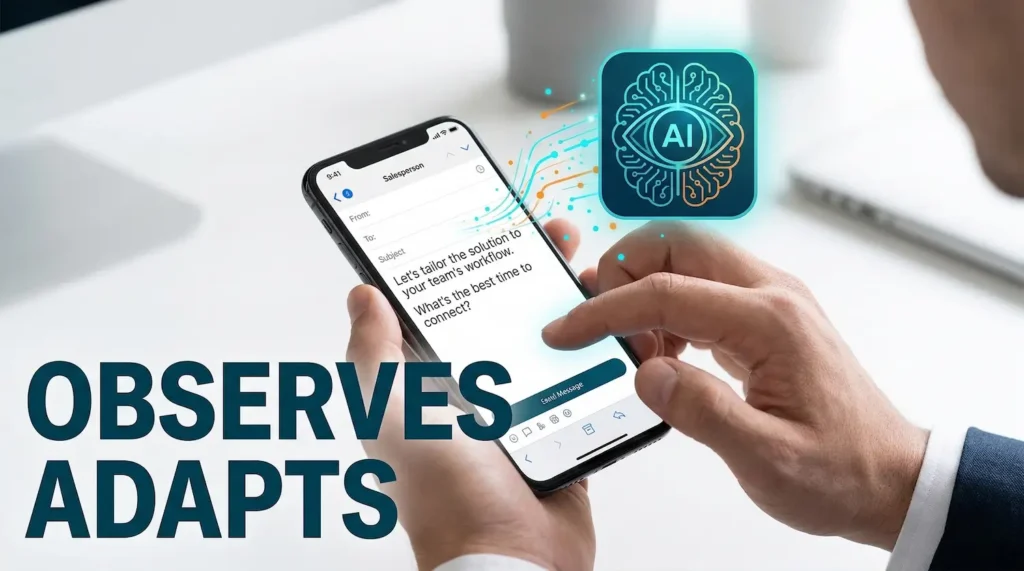
Pattern recognition learns which behaviors correlate with ‘Closed Won’ deals (e.g., specific language in a proposal) and suggests those successful approaches to the rest of the team.
A natural language interface allows users to query their data by typing or speaking questions (e.g., ‘Show me all stalled deals at Tier 1 prospects’) rather than manually searching for information or building reports by hand.
Autonomous CRM vendors can turn around customer requests quickly.
Depending upon the vendor you choose, you may be able to suggest a self-driving feature on a Friday, and the requested functionality will be available the next week.