

The first step in deciding whether your business needs a CRM administrator is understanding precisely what a CRM administrator does.
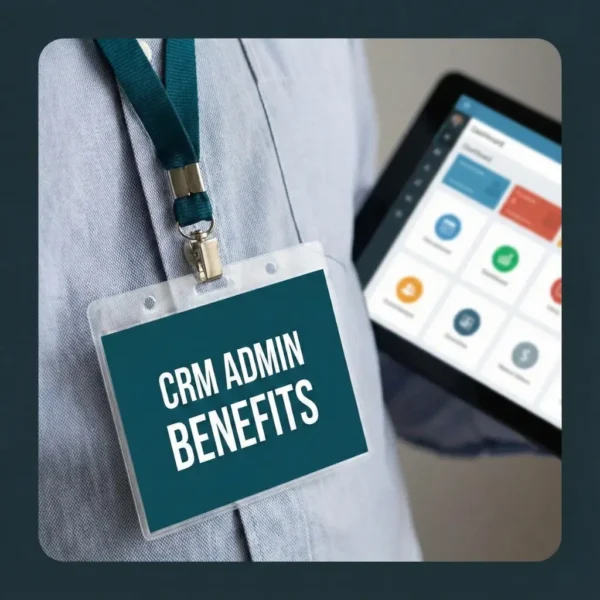
CRM administration means the ongoing work of configuring, securing, supporting, and improving a customer relationship management system so the people who rely on it can do their jobs. The CRM administrator is the person who owns that work.
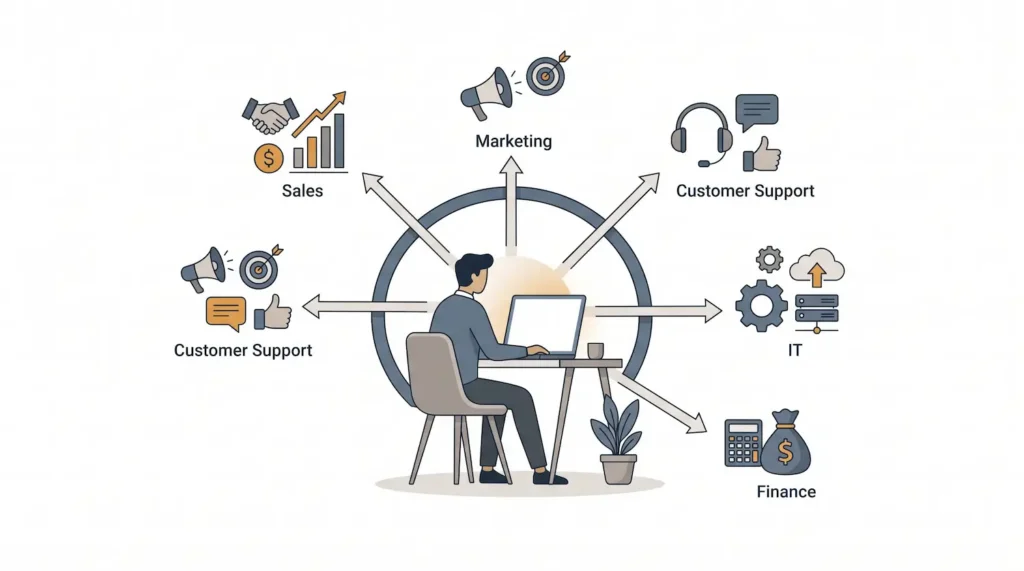
The administrator bridges the gap between the CRM system and its users, serving as a liaison between business users and the IT function responsible for developing and maintaining the system.
In practice, CRM administration covers user management, security, permissions, data quality, reporting, training, and day-to-day support.
The administrator is the company’s subject-matter expert on the CRM and its use. They know how to reconfigure it as needs change, build reports, and troubleshoot when problems arise.
To do this effectively, the administrator must have an in-depth understanding of the CRM software, sales, marketing, and business processes, and how they relate to it.
In a full-blown CRM implementation, every department will interact with the software, requiring the administrator to interact with all of those departments.
This can present problems when using existing IT or marketing staff members as CRM administrators.
Their limited understanding of other departments and business processes can hinder the successful implementation of a CRM solution across departments.
On a practical level, a CRM administrator needs to have IT experience, an understanding of sales, marketing & customer support practices, and strong interpersonal skills.
They will also provide training and education for new and existing users as the system evolves, which is where many deployments quietly fail. Our guide to a 5-step CRM implementation strategy explains why untrained users are the most common source of resistance to a new system.
As the business grows, so will the demands on the CRM administrator. If you’re using existing staff to administrate your system, these increasing demands will take more of their attention from other tasks.
When Do I Need a Dedicated CRM Administrator?
As every business is different, there is no easy answer to this question. Hiring someone to handle your CRM system is an investment, not an inexpensive one.
According to ZipRecruiter, the average nationwide salary for a CRM administrator in the U.S. is roughly $75,700, with 75th-percentile administrators earning around $92,000 and top earners near $115,000.
Deciding whether it’s time for a dedicated administrator will largely depend on the answer to these two questions:
- What are the foreseeable responsibilities of your CRM administrator?
- Can your existing staff effectively handle those responsibilities, along with their regular duties?
Depending on the size of your business, your CRM administrator could have a variety of duties.
For smaller businesses, the administrator must handle password changes, add custom fields, create email templates, manage staff training & inquiries, and more.
At the enterprise level, CRM administration can involve ERP integration, managing security concerns, handling individual and group policies and permissions, developing marketing automation templates, and creating custom applications.
The CRM Administration Load Test
Rather than guessing, score your own situation. Award the points below for every statement that is true of your business today.
| Signal | Points |
|---|---|
| Twenty-five or more active CRM users | 3 |
| Two or more departments working in the system | 2 |
| CRM integrated with ERP, marketing automation, or billing | 3 |
| More than five hours a week spent on CRM requests | 3 |
| A standing backlog of unfinished change requests | 2 |
| Teams rebuilding reports in spreadsheets | 3 |
Four points or fewer, and your existing staff can most likely absorb the work. Five to nine, and you need a split role with a named owner and protected hours. Ten or more, and you have already passed the tipping point.
While it is possible to split the administrator role between two or more departments, it’s a good idea to closely monitor all those involved, looking for signs that the system is becoming too demanding.
If you plan for that tipping point from the start, you can transition to a dedicated administrator without significant disruption.
Allowing your existing staff to handle CRM administration can be tempting and save you some money, but it carries risks.
A CRM administrator needs to wear many hats. The individual must be part manager, educator, and diplomat.
On top of that, they need to be part of whatever their job is when they’re not handling your CRM needs. That’s a lot of parts for one or two people.
If there is a problem with the CRM system, their attention will be drawn away from other duties, and vice versa.
As the system grows, their attention will become more divided, potentially leaving them unable to do either job effectively.
Suppose your staff has the skills, abilities, and time to manage your CRM system effectively. In that case, you may be able to delay hiring a dedicated administrator until the system outgrows your staff.
Not Without Risk
Working without a dedicated administrator is a balancing act. You have to weigh the cost of a dedicated administrator against the cost of your CRM investment.
You must also factor in what you’ve invested in your existing staff and their other roles.
In the best-case scenario, they will successfully manage both tasks and keep your CRM system running. When the system outgrows its abilities, you can hire an administrator and have your staff get them up to speed.
This can work well if you manage your growth and bring on a dedicated administrator before the CRM system becomes overwhelming. In the worst-case scenario, your staff won’t be able to handle both tasks.
Then, providing more support for their original role may be necessary, or you may have to hire a CRM administrator earlier than you anticipated. A careful, measured approach should help you avoid many potential difficulties.