
Thinking about adopting a new CRM platform? As with SaaS apps in general, the CRM playing field has been shifting under everyone’s feet.
Before creating a CRM vendor shortlist, consider which high-level system path best suits your business. You may pull your shortlist from more than one path.
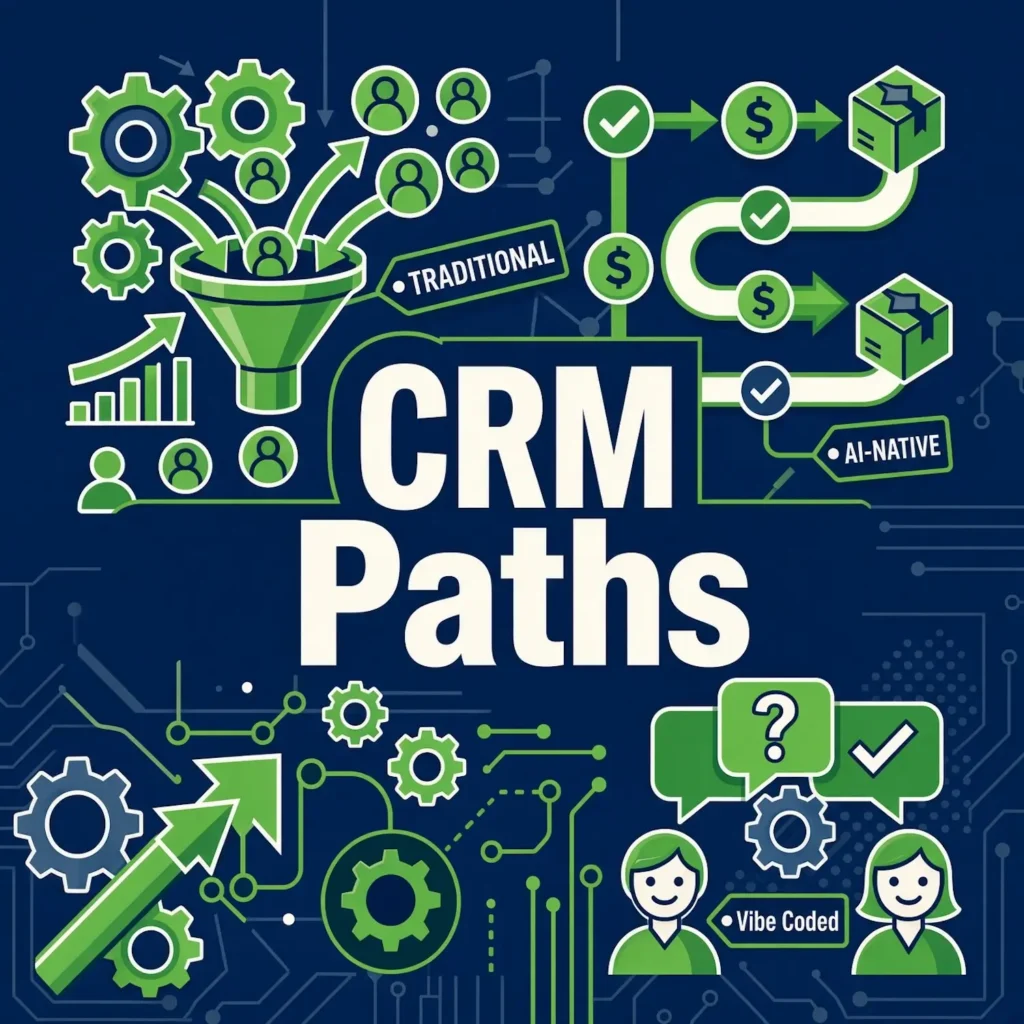
Here are three high-level CRM paths to consider.
1. Traditional CRM platforms
Examples of traditional CRM platforms are:
- Salesforce
- HubSpot
- Microsoft Dynamics
- Zoho
This path is best when multiple departments need to be served, integrations with existing systems are non-negotiable, and the organization tracks a wide range of data points.
These platforms are mature, extensible, and built for complexity. They come with large ecosystems, including certified consultants, app marketplaces, and established training paths. These matter when you need to onboard teams at scale or connect to dozens of other tools.
The tradeoff is weight. Implementation timelines are longer, configuration requires expertise, and licensing costs climb quickly as you add users and features. How heavy that tradeoff feels varies by vendor, as our HubSpot vs Salesforce comparison illustrates.
For organizations with the resources to invest upfront, these platforms remain the safest long-term bet.
However, even the most capable platform fails if your team avoids using it — which is why usability should weigh heavily in any evaluation.
Looking ahead, agentic access will matter more as traditional CRMs pivot to headless.
2. AI-native CRM platforms
Examples of AI-native CRM platforms are:
- Attio
- Aurasell
- Reevo
- Clarify
- Day.ai
These options are for fast-moving organizations that prioritize interactions over data management.
AI-native CRM systems take autonomous action — creating records from emails, summarizing calls, and logging activity without human input.
The promise is less admin work and more signal. Instead of reps spending time on data entry, the system monitors activity across channels and automatically keeps the record up to date.
The underlying technology is advancing rapidly. MIT Sloan researchers have found that agentic AI systems are being adopted faster than in previous waves of AI, and major software vendors are embedding these capabilities directly into their platforms.
Teams need to be comfortable with AI making decisions in the background. That means trusting the system to categorize a deal stage, prioritize a lead, or flag a risk, and having a process to correct the CRM when it gets things wrong.
The upside is speed. The risk is misalignment.
3. Build your own (vibe-coded CRM)
Examples of business app builders are:
- Claude Code (Anthropic)
- Codex (OpenAI)
- Google AI Studio (Alphabet)
- Cursor (SpaceX)
- Loveable
- Bolt.new
- Replit
Vibe-coding a custom CRM is best for companies with narrow, well-defined requirements.
If your team would ignore 80% of a traditional platform’s features, you may be better served by something built specifically around your workflow — simpler, cheaper, and faster to adopt.
These tools let you stand up a working application in days, not months.
The catch is that you own the result. No vendor support team to call, no pre-built connector library, and no upgrade path someone else manages for you.
This direction works well when the business needs are clear and contained.
The project becomes risky when scope creeps toward the complexity that traditional platforms or AI-native systems were designed to handle.
Stanford’s 2025 AI Index Report found that the cost of running AI-powered tools has dropped dramatically, which is one reason this category of builder is suddenly viable for small teams that would never have considered custom development before.
Start with how your team works today, and not how you wish they worked.
A CRM that matches your current reality will get adopted. One that demands your team change first will collect dust.
Before you compare vendors, separate your strategic goals from your tactical requirements, so you know which decisions matter most.
The right CRM is the one your team will adopt, and that will deliver the highest returns for your organization.